Thursday, October 15, 2009

Interlude


I'll be back soon with more posts about home.  
I've been revising my novel, something I've been working on for several years, and am feeling a sense of urgency to finish it up. 

In the meanwhile, I want to recommend a wonderful BBC series called Little Dorrit, based on a novel by Dickens. The story delves into an extreme form of home and shows us how money and society, and lack of money can distort our sense of home and happiness.  You can watch it on DVD.


Check it out. The acting is superb. Screenplay by Andrew Davies. 


Wednesday, September 30, 2009

Housekeeping (not what you think)


Housekeeping, a novel 

--Not a book about a woman sweeping her kitchen floor.  It is one of the most haunting, amazing, astonishing novels I have ever read. Yet, oddly, I resisted reading it for years because I was put off by the title.

So, don’t you get put off by it.  It’s not what you think.

This novel has everything to do with blurring the boundary that divides our sense of outside and inside, exterior and interior, home and homelessness.  It bends the boundaries of normalcy in terms of how we define home and what evokes our feelings of home.   I don’t want to say more than this because if you haven’t read this book, you must.

You must.

One more thing.  As many of you already know, this book came out in the 1980s.What you don’t know is that I was a graduate student at Brown University, in the creative writing department.  While I was there, one of our graduates came back to give a reading from her debut novel.

Guess who?

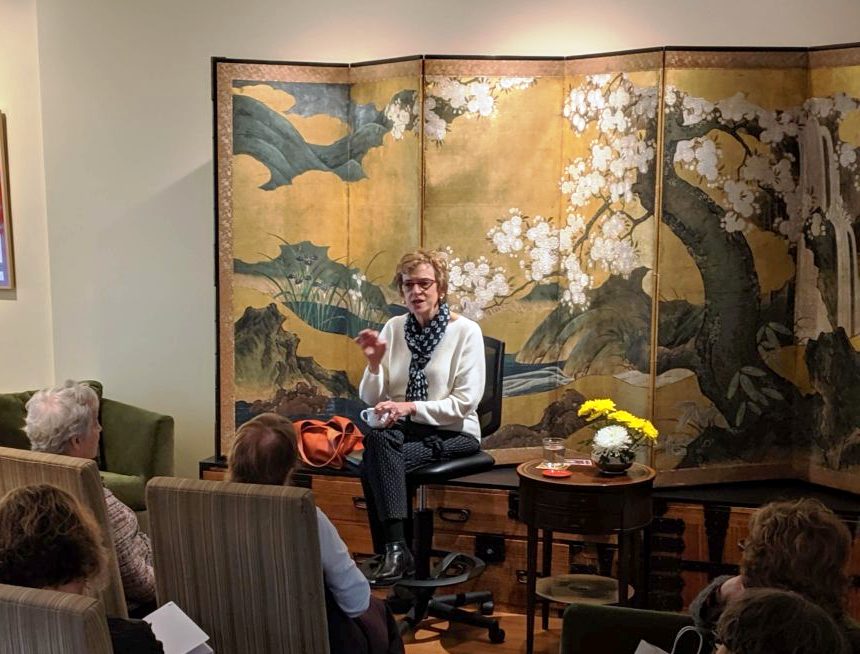
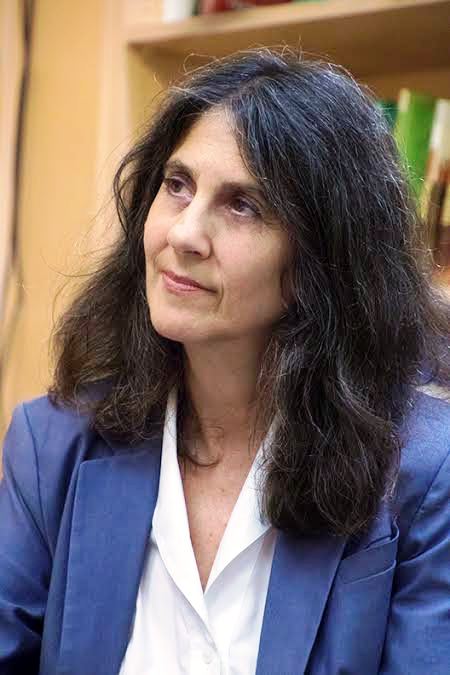
Marilynne Robinson.  Her novel was called, Housekeeping, and it was rocking the literary world (but I couldn't get past my resistance to the title). 

At the reception, I remember how shy Marilynne was.  She stood at the edge of the crowds, politely nodding when people went up to her to congratulate her on her success. She seemed exceedingly introverted, her head and body almost an afterthought, meaning she didn’t reveal much in her facial expressions or body movements.

I am a fast reader and often I’ll read in chunks of paragraphs or half pages, but this book demanded that I read it sentence by sentence.  Robinson’s words conjured up ghosts that hovered over the pages.  I swear to God I felt strange, intangible spirits rising out of this book.

Let me know if you experienced these eerie sensations, too.


Tuesday, September 22, 2009

Sequatchie Cove Farm


On my travels this summer, I spent a week at Sequatchie Cove Farm in Tennessee. From Boston, where I live, it takes twenty-two hours to drive there. I like that it takes time and effort, and a measure of discomfort to arrive at this beautiful, sequestered place. The 300-acre farm is ringed by the Cumberland Plateau and embraced by thousands of acres of forest. Little Sequatchie River, a cold stretch of water, runs through the woods beyond the vegetable fields and small meadows where the cows graze.


As I cross multiple state lines, and head south to the farm, I undergo a process of shedding. I leave behind my urban sounds and sights—neighbors walking their dogs on leashes, brownstones lining asphalt sidewalks, car horns and trolley bells dinging.

After two days in an air-conditioned car, speeding at 75 miles an hour, I enter a world that is covered with grass, acres of blueberry bushes, tomato plants, twigs, pebbles, river rocks, and sleeping dogs—unleashed—under the shade of big-leaf magnolias, pine and oak trees. My brother and sister-in-law’s house is made of river stone and wood. Giant slabs of granite steps lead to their front porch.

At the farm, my body shifts to a different pattern of movement and perceiving. My eyes relax, taking in long views of sky and mountains, and micro-views of honey bees. I breathe in dust and the smell of hay, cow pies, wood and leaves. Internal mechanisms that I’ve forgotten open up inside. My sense of time changes. In fact, time doesn’t seem to matter much. I do a lot of drifting and strolling.

At night, I lie on top of my bed sheets, floating on a mattress of darkness, the moist air bathing me in layers of heat. No air-conditioning here. The boundary that separates inside from out disappears. I am suspended in a universal dream. Moonlight casts shadows across fences and trees, and stirs up energy I didn’t know I harbored in my arms and legs. I’m buzzing in this state. I can’t fall asleep. I’m too busy being. The sound of cicadas and crickets is deafening, louder than Beethoven’s ninth symphony. Actually, it’s more than sound. It’s vibrations pulsing and ringing throughout the cove until everything—cows, pigs, dogs, chickens, cats, trees, beds and me—is throbbing like a single, supernatural heart.

At 4:30 in the morning, the rooster breaks this unified rhythm, calling out in ragged jerky notes. Its shout rips apart the night sky to let in glimmers of sunlight. I try to catch one more hour of sleep but am too excited. By 6 a.m. I’m dressed and walking down the path to my brother-in-law’s house fifty yards away for a cup of coffee. The cicadas have stopped their noise. In the silence, I hear my sneakers flicking through blades of dew soaked grass.

The cows are awake too. They see me moving across the field. I feel like a figment of their imagination, an odd figure whose purpose to them is unknown. As I stand in the kitchen, waiting for the French press to brew my coffee, the fields take on their daytime shapes. Colors begin to reappear: green and grey. Morning clouds slide away into the mountainside.

My time at Sequatchie Farm Cove has taught me that paradise is not bound to heaven. I can find pieces of it right here on Earth, where I am.

Where do you go to break up old patterns of living?

Monday, September 14, 2009

Stranger at Home


>

I am back from a month on the road. I didn’t say back home. Just back. I have that feeling of discombobulation. Where I live looks strange and dusty and vacant. Nothing has changed except that several bookcase shelves in my office fell off their tracks causing the books to tilt right. It’s as if an energy force got loose in my absence, some invisible house bear that started rummaging. For what? The missing me?


I’m sort of here, but not really.

In the last month, I imbibed the spirit of other people’s homes and I’m still wrapped up in those vectors of other places. Coming back, I recognize every room, every vase, chair and painting on the wall, yet I feel odd, alienated from these familiar objects. I know I put them there but that was me before I left, and now that I’m back, I’m not the same.


And the dining room knows it. It looks lifeless and removed from me. Nothing has been rearranged, yet the tabletop isn’t humming with the previous night’s conversation. No one has eaten there for weeks. The air knows it, too. It smells stale, devoid of scents and seasonings. In fact, all the rooms have a shuttered up feeling. At what point, I wonder, does the house shift from waiting for its owner to return to succumbing to certified vacancy?


Who am I? Where am I? And how do I start to make my home feel like mine again?


Yesterday, my first day back, I took a nap on the living room couch. That put some body heat into the cold cushions, but a few hours later, I was on the internet researching homes for sale in another state. --Oh, there she goes again. She’s off on a fantasy to find something better, someplace that’s far away from where she is now, her traveling self unable to settle down and be still.


I took out the vacuum cleaner to vent my restlessness. I attacked the foyer rug and tried not to be critical of my office. But it was messy: black cat hairs clumped in the weave of the off-white rug. Soon, the noise of the vacuum buzzed the air and sent vibrations through the floors reawakening them as I made my way across the dormant rooms.


I’d been gone. I felt different. I was changed by my travels. I needed to stir this soup called home, mix in remnants of my old life with the elixir of renewal to create something altered. I was ambivalent, frantic, happy, uncertain, churning with the fact that I had returned. I needed to add those fresh ingredients of what I saw, tasted, talked about, smelled; my arm jabbing back and forth, pushing and pulling the vacuum hose like a spoon in a big pot of stew.


How do you feel about your home after you’ve been away on a long trip? Relieved? Happy? Disappointed? All of these things?

Friday, August 28, 2009

Modern inconveniences


Out Stealing Horses by Per Petterson, translated by Anne Born.

This week I'd like to recommend a novel that my friend and novelist Jennifer Jefferson recommended after reading my post about the stone house without electricity. I haven't read this book but I'm intrigued. Here's what Jennifer said about Out Stealing Horses: "A 67-year old Norwegian man moves to a cabin with no modern conveniences. It's an amazing book about home and family."

The novel was a top ten pick of the year by The New York Times Book Review.

I'm going to give it a whirl and hope you will, too. Let me know what you think. Even if you read it months from now, come back and leave a comment here. My email alerts me to your responses.

Wednesday, August 19, 2009

West Virginia Stone House

1700 WV house 015 I love staying in friends' homes when I travel. It's a chance to spend time that is both catching up and being a part of the life they live at that moment. From morning coffee routines to making dinner together to sharing bathrooms and hallways, I literally enter their shells, breathe their air, hear the sounds they live with. Going into someone else's shell allows me to reflect, once again, on my own lifestyle and the house I live in now. How are my friends' routines different or the same? What fresh perspective will I bring home with me? Will I make my coffee differently or bake those rolls that my friend's mother baked us?1700 WV house 007

In West Virginia, I stayed in a small town of Romney. It's in the Appalachian mountains. My friend grew up in the house where I slept for 3 nights. His sons grew up there, too. The house is a big L-shaped brick house that still has a bullet hole from a civil war scuffle. In their backyard, a herd of deer appear at dusk. At night, the stars are so bright, layers of glittering chandeliers float above me like holograms. The Milky Way is painted across the great arch of our galaxy. I can see the curve! A screech owl calls from down the holler (that's West Virginian for "hollow"). In the city, where I live, the stars look faded and forgotten in comparison.

1700 WV house 002 About a mile down the road from my friend's house, his uncle, Dan Wagoner, a well-known dancer who had a dance company in NYC for more than 20 years, spends the summer in a stone house built in 1789. Dan still teaches dance at a university in Florida during the school year, but chooses to return to his childhood roots every summer to a place that has no electricity or running water.

1700 WV house 013 In this stone house, once owned by Dutch slave owners, Dan has released himself from the modern world. He says "it takes about 10 days for an inner shift to occur," before he slows to a different pace and way of thinking. He draws his water from an outside pump, and takes baths in his clawfoot tub under a tree. At night, the porch is illuminated by candles, and moonlight hovering over the distant hills.

1700 WV house 012 "Ten days for an inner shift to occur." I keep thinking about that phrase. How many of us give ourselves permission to make an inner shift? Or give ourselves ten days to let any kind of change happen?

1700 WV house 005 In this stone house, which my friend has helped restore over many years, Dan has created a way of being, a sensibility. I admire his courage, his ability to do this.

Could I do it? There's something inside me that wants to try and something else that is afraid. What would happen to me if I were to live in a house without electricity for two months? Would I want to return to the city or would I disappear? Become unknown or forgotten? Or would I uncover some sort of magic, another world that has been waiting for me?

1700 WV house 003 How do you think you would handle living in place like this? If you're a country person, please tell me your thoughts. If you've lived in cities most of your life as I have, I want to hear from you, too.

Thursday, August 13, 2009

The Habit of Being


I love the title of this book. It says so much about what I'm reaching for in my search for a home. As I scramble from house to house, place to place, I'm really striving to develop a habit of being, a way of finding my truest center--a way of living that feels right.

This book of letters reveals the life of one of my favorite writers, Flannery O'Connor. Flannery grew up in the South (Georgia), and since I'm traveling through Southern states on a visit to see my husband's family, it seemed a good excuse to recommend this book and her work in general.

Flannery returned home to Georgia to live and fend off what proved to be a fatal illness: Lupus. She wrote astonishing stories in her short life. I believe she was 39 when she died.

Despite our numerous differences--she's from the South, I'm from the North; she lived in a rural town, I grew up close to a big city; she was a serious Catholic, I'm a questioning, uncertain Jew; I feel connected to her because I, too, had a serious blood condition and lived for several years under the threat of death.

She died. I'm still here, yet I continue to marvel at how she found strength and home in her faith.